-
Edu4Sure Admin
- March 25, 2026
Choosing the right learning platform can be confusing today. If you’re wondering how to choose the right learning platform for skill development, it’s important to understand what actually matters before joining any course or training program. Before we take you deeper into platform preferences, let us discuss Skill Development first.
Skill development has become one of the most important parts of building a career today. Degrees are still there, but what really creates opportunities is what you can actually do. Whether it is marketing, data, design, or any other field, people who have practical skills are the ones moving ahead faster.
Because of this, more people are turning towards skill development courses. Students want to become job-ready, working professionals want to upgrade, and many are trying to switch careers. This has increased the number of options a lot. Coaching classes, online courses, short-term programs, everything is available. With so many options, choosing the right one becomes confusing. Every course looks useful from the outside. Every institute talks about results. But once you join, you realise whether it actually helps you learn properly or just takes you through topics.
That is why this decision matters a lot. A course should match your goal, your routine, and the way you learn. When that alignment is right, learning feels clear, and progress becomes visible. When it is not, even after spending time, things don’t move forward the way you expect.
In this blog, you will see exactly what to check before joining any coaching institute or online course for skill development. This will help you choose something that actually works for you, not just something that looks good before joining.
Why Choosing the Right Learning Platform Matters
When you join any skill development course, the platform decides how your daily learning will happen. It affects your understanding, your consistency, and how confident you feel while using that skill. This is why the platform matters a lot.
To understand it clearly, focus on these points:
1. It Decides Your Daily Learning Flow
The platform controls how you study every day. Whether you follow a fixed routine or manage your own time, this directly affects your consistency.
- Fixed system → helps you stay regular
- Flexible system → gives you control
Your daily pattern should match your routine; otherwise, learning starts breaking.
2. It Affects How Well You Understand Concepts
The way content is delivered decides how easily you understand things. Clear explanation and proper flow reduce confusion and save time.
- Structured teaching → better clarity
- Unclear delivery → repeated effort
Good platforms make topics feel simple and connected.
3. It Controls How Much You Practice
Skill development depends on practice. The platform decides whether practice is part of learning or left on you.
- Built-in practice → better skill development
- No structured practice → weak application
Without regular practice, understanding stays incomplete.
4. It Impacts Your Consistency
Consistency is what completes the course. The platform either supports it or leaves it fully on you.
- System-driven → easier to stay regular
- Self-driven → needs strong discipline
This is where most people struggle, so this factor matters a lot.
5. It Shapes Your Overall Learning Experience
Your experience depends on the support, interaction, and guidance available during the course.
- Active support → smoother learning
- Limited support → confusion builds
When support is available, you don’t feel stuck during learning.
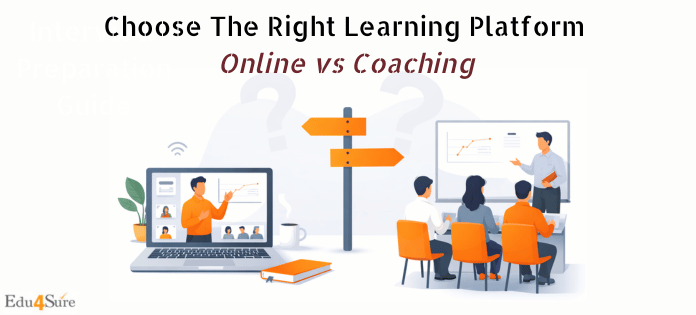
Coaching Classes vs Online Courses (Quick Understanding)
Coaching classes follow a fixed routine. You attend at a set time, follow the pace, and stay connected with the system daily. This helps many people stay consistent because everything is already planned.
Online courses give you control. You decide when to learn, how fast to go, and how many times to repeat a topic. This works well when you can manage your own schedule and stay regular without reminders.
Simple way to decide:
- Fixed routine suits you → coaching classes
- Flexible timing suits you → online courses
- You like revisiting topics → online courses
- You follow schedules easily → coaching classes
Key Factors to Choose the Right Learning Platform for Skill Development (Online vs Coaching)
When you are checking any online course or coaching classes, don’t go by how it looks from the outside. Focus on what is actually inside the course and how it will work for you daily. These points will help you judge that clearly.
1. Faculty / Mentors
The way a teacher explains things will decide how quickly you understand and how confident you feel later.
What to look for:
- Simple and clear explanation style
- Use of real examples instead of only theory
- Practical experience in the field
- Demo class or sample session available
2. Course Curriculum
The syllabus should feel connected and useful, not just a long list of topics.
What to look for:
- Proper flow from basics to advanced
- Updated topics based on current use
- Clear end result mentioned
- No unnecessary or repeated topics
- Coverage of tools or platforms used in real work
- Easy to understand structure
3. Practical Learning
Here you actually build the skill, not just understand the theory.
What to look for:
- Assignments after important topics
- At least 1–2 proper projects
- Tasks where you create something on your own
- Practice is regular, not optional
4. Consistency System
The course should keep you involved regularly, so learning doesn’t break in between.
What to look for:
- Fixed sessions or structured plan
- Regular tasks or work to complete
- Some form of follow-up
- Progress gets checked
5. Doubt Support
Doubts should be cleared quickly so you don’t carry confusion forward.
What to look for:
- Easy way to ask questions
- Support available beyond class time
- Someone actually responds and guides
- No long waiting for answers
6. Learning Environment / Community
The environment should help you stay connected to learning rather than feel isolated.
What to look for:
- Active group or batch interaction
- Students discussing or sharing work
- Some level of engagement beyond classes
7. Reviews and Results
Real feedback shows what actually happens after joining.
What to look for:
- Students talking about real learning
- Mention of practical work or improvement
- Not just ratings, but real experience
8. Career Support
Learning should connect with what you plan to do next.
What to look for:
- Resume or portfolio help
- Interview guidance, including Q&A asked in interviews
- Directions after completing the course
- Support that continues beyond classes
9. Cost vs Value
Fees should match what you are getting from the course.
What to look for:
- What is included in the fees
- Whether practice and support are part of it
- Access to learning material
- Overall usefulness of the course
10. Teaching Style & Delivery Method
The way content is delivered affects how long you stay focused and how well you understand things. Even a good syllabus feels difficult if the delivery is dull or confusing.
What to look for:
- Teaching feels engaging, not monotonous
- Concepts are broken into simple parts
- Pace is neither too fast nor too slow
- Screen-based or classroom teaching feels comfortable to follow
- You can stay attentive for full sessions
If most of these points are clearly present, the course will feel organised and easy to follow once you start. If many of these things are missing, you will notice the gap in your understanding and consistency after a few weeks.
Red Flags to Avoid while choosing the right learning partner
- Avoid courses that talk only about results without clearly explaining how learning will happen
- Avoid fake promises like guaranteed success or very fast outcomes
- Avoid courses where student results or real work are not visible
- Avoid an outdated syllabus that does not match current tools or industry use
- Avoid courses where practical work, like assignments or projects, is missing
- Avoid unclear teaching structure where you don’t understand the flow
- Avoid weak support systems where doubt-solving or guidance is not clear
- Avoid courses that feel too basic or surface-level
- Avoid options where no direction is given after course completion
Online Skill Courses: When Are They Better
This is not a correct scenario for everyone, but it would give you a clear idea of whether the Online Courses Platform is better for you.
- Better when your daily schedule is not fixed, and you prefer learning at your own pace
- Better when you like revisiting topics multiple times
- Better when you are managing college, a job, or other responsibilities
- Better when you can stay consistent without reminders
- Better when the course includes structured assignments and projects
- Better when you want flexibility along with a clear learning path
- Better when you are comfortable learning independently
- Better when you want to control your learning speed and timing
Final Thoughts about Learning Platform for Skill Development
Focus on your goal first, then choose the course that fits your routine and way of learning. Check how teaching happens, how much practice is included, and how support is given during the course. Look at real student outcomes, so you know what you can achieve after completing it. A clear syllabus, regular work, and proper guidance make learning smooth and useful. When these things are in place, staying consistent becomes easier, and results follow naturally.
FAQs: How to choose a learning platform for skill development
Q1. How can I check if an online course platform is good?
Look for a clear teaching style, a structured curriculum, practical assignments, active doubt support, and real student results. Demo classes and reviews can also help you judge the platform before joining.
Q2. What is more important: course content or the learning platform?
Both matter, but the learning platform plays a bigger role in how effectively you understand and apply the content. A good platform ensures proper delivery, practice, and support, which directly impacts your results.
Q3. Which is better for skill development: online courses or coaching classes?
It depends on your learning style. Online courses are better for flexibility and self-paced learning, while coaching classes are better if you need a fixed routine and regular guidance.
Q.4 How important is practical learning in skill development courses?
Practical learning is essential. Without assignments and projects, your understanding remains incomplete. Real skill development happens when you apply concepts regularly.
Q5. Which institute provides proper training with assignments, projects, and continuous guidance for skill development?
Some institutes focus on both learning and training together. For example, platforms like Edu4Sure provide structured programs where students work on assignments, real projects, and get regular guidance. This helps in building a strong understanding and applying skills confidently in real situations.
Would you like to explore our learning platform? Please connect at partner@edu4sure.com or WhatsApp/ Call +91-9555115533.
