-
Edu4Sure Admin
- May 4, 2026
Stress in a woman’s life does not come from one place. It builds from multiple directions at the same time. Work pressure, expectations at home, personal goals, relationships, health, and sometimes the pressure of handling everything together without showing it. Over time, this creates a constant mental load that does not always go away even when the day ends.
What makes it more complex is that stress is not always visible or easy to explain. Some days feel manageable, while other days feel heavier without any clear reason. This is where understanding stress properly becomes important. When you know what is affecting you, you can manage it better instead of just reacting to it.
This blog focuses on real, practical ways to manage stress by understanding where it comes from and how to deal with it in a way that actually works in daily life.
Understanding Where Stress Comes From in a Woman’s Life
Stress doesn’t always come from big problems. Sometimes it comes from the kind of days where nothing feels wrong, but everything still feels heavy. You finish your work, you handle things, you talk normally, but inside there’s this constant pressure that doesn’t go away.
1. The mental load that never stops
Even when you sit down to relax, your mind doesn’t. It keeps running through tasks, conversations, responsibilities, and things you need to do later. It’s exhausting because you’re never fully “off.” That tiredness builds quietly, and after a point, you don’t even remember what it feels like to feel completely relaxed.
2. Constant switching between roles
One minute you’re handling work, the next you’re dealing with something personal, then something else comes up. There’s no pause, no reset. It feels like you’re always in the middle of something. That constant shifting makes your mind feel stretched all the time.
3. Carrying emotions that are not even yours
You listen, you understand, you adjust, you manage situations so things don’t go wrong. But no one really talks about how heavy that feels. You don’t just deal with your own stress; you absorb a part of everyone else’s, too.
4. The pressure to keep everything together
Even when you’re overwhelmed, you still try to manage things properly. You don’t always show it, but there’s this silent expectation that you should be able to handle it. That pressure sits in the background and slowly turns into stress.
5. Not having a real break, even when you stop
Even when nothing is pending, your mind still looks for something to think about. That’s the part that drains you the most. You rest, but it doesn’t feel like rest.
Hidden Stress Triggers Most Women Don’t Notice
A lot of stress today comes from constantly seeing what others are doing. Career growth, lifestyle, fitness, relationships, everything is visible online. Even if you don’t consciously compare, your mind still registers it.
Over time, this creates pressure to do more or be more, even when you were originally satisfied. It doesn’t feel like stress in the moment, but slowly it builds into mental pressure.
2. Feeling the need to always stay strong
A lot of women feel like they have to handle everything without breaking down. Showing emotions is often avoided because it feels like losing control, but holding everything in doesn’t reduce stress; it just hides it. Over time, this creates emotional pressure that keeps building inside, and even small situations start feeling heavier.
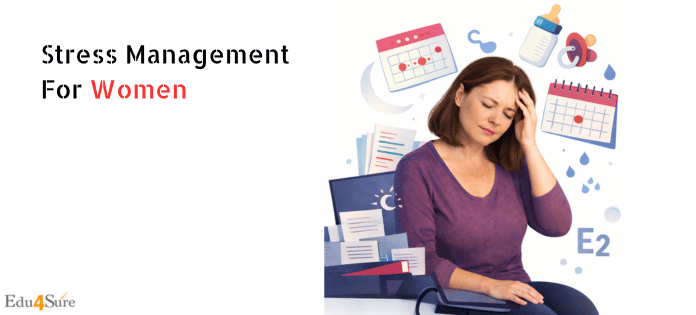
How the Menstrual Cycle Affects Stress (A Part You Can’t Ignore)
Some days feel manageable. Some days feel unnecessarily difficult. And the worst part is, nothing outside has really changed. That’s where your body comes in.
1. Your reactions change, even if situations don’t
There are days when you can handle things calmly, and then there are days when even small things irritate you. It’s confusing because you feel like you’re overreacting, but you’re not. Your body is just in a different phase.
2. Low energy makes everything feel heavier
When your body is already tired, even normal tasks feel like effort. And then you start getting frustrated at yourself for not doing enough, which just adds more stress.
3. Emotional sensitivity hits differently
There are moments when things feel more personal than they actually are. You think more, feel more, and sometimes even small things stay in your head longer than they should.
4. Forcing yourself to function normally
This is where most of the frustration comes from. You expect yourself to perform the same way every day, even when your body clearly isn’t in that state. That gap between expectation and reality creates unnecessary pressure.
How to Manage Stress During Low-Energy Days
1. Adjust expectations instead of forcing productivity
There are days when your body naturally has lower energy, especially around your cycle. Trying to perform at the same level as your high-energy days only adds pressure. When you adjust expectations and focus on lighter tasks, things feel more manageable instead of overwhelming.
2. Plan your work based on your energy patterns
Over time, you start noticing that your energy is not the same every day. Some days you feel focused and active, while other days feel slower. Planning your work based on this makes a big difference. Keep demanding work for days when you feel more active and lighter work for slower days.
3. Take rest without guilt
Rest often comes with guilt, like you should be doing something instead. But during low-energy phases, rest is necessary, not optional. When you allow proper rest, your body recovers faster, and your mind feels clearer. That makes everything easier later.
Daily Habits That Actually Reduce Stress
The problem with most stress advice is that it tells you what to do without acknowledging why it’s hard to do in the first place. These aren’t new ideas, but here’s what actually makes them work.
1. Take breaks even when you feel like you shouldn’t
Most women skip breaks because stopping feels unproductive. But the break is what makes the next hour actually useful. When you push through without pausing, your output drops and your stress rises. A few minutes away from what you’re doing isn’t wasted time; it’s what keeps you functional through the rest of the day.
2. Write things down instead of carrying them in your head
Your mind is not a good storage system for tasks, worries, and reminders all at once. When everything is sitting in your head, it creates a constant low-level pressure even when nothing urgent is happening. Writing it down doesn’t just organise your day, it gives your mind permission to stop holding onto it.
3. Sleep is not optional, even when your schedule says otherwise
You probably already know sleep matters. The harder part is actually prioritising it when the day hasn’t fully wound down yet. When you’re under-rested, your emotional responses are sharper, your patience runs thinner, and stress builds faster. It’s not just about tiredness; it changes how you experience everything else.
4. Check in with yourself, not just your tasks
At the end of the day, most women review what they did or didn’t finish. Try also noticing how you actually felt. Were you running on pressure the whole day? Did something sit badly that you didn’t address? This isn’t about journaling or a formal routine. It’s just a moment of awareness that helps you catch stress before it quietly accumulates into something heavier.
Handling Emotional Stress in a Practical Way
Emotional stress is the kind that doesn’t show immediately. It builds, layer by layer, until one small thing triggers everything at once.
1. Actually admitting that something is bothering you
Instead of saying “it’s fine,” noticing that something feels off is the first step. Ignoring it doesn’t make it go away.
2. Overthinking the same situation again and again
You replay conversations, situations, possibilities. It doesn’t solve anything, but it drains you mentally. And you know it, but it’s still hard to stop.
3. Keeping everything inside
You don’t always say what you feel. Sometimes, because you don’t want to create issues, sometimes because you don’t know how to explain it. But that weight stays.
4. Reacting when you’re already overwhelmed
When too many things build up, even a small situation can trigger a bigger reaction. It’s not about that one moment; it’s everything before it.
5. Not giving yourself time to process
You move from one thing to another without stopping. No time to understand what you’re feeling, so it just stays there.
Managing Work and Life Pressure Together
This is where most of the frustration comes from, trying to balance everything and still feeling like it’s not enough.
1. Deciding what actually needs your attention
Not everything is urgent. When everything feels important, stress increases. Choosing priorities reduces that pressure.
2. Taking on more than you can actually handle
You say yes, you adjust, you take responsibility. At that moment, it feels manageable, but later it starts feeling heavy.
3. Not having clear boundaries and always being available
Work flows into personal time, and personal issues come into work. There’s no clear line, so your mind never fully switches off. Messages, calls, expectations, you’re always reachable. That constant availability keeps your mind in a semi-active state all the time.
4. Feeling guilty when you slow down
Even when you take a break, you feel like you should be doing something. That guilt makes rest feel incomplete.
Understanding Yourself Instead of Fighting Stress
One of the biggest mistakes people make is trying to fight stress without understanding it. Stress is not always something to eliminate. It is something to manage by understanding your patterns.
Some days you will feel productive and strong. Other days, you will feel low or overwhelmed. Instead of forcing the same level of performance every day, adjusting your expectations based on your energy helps reduce pressure. This becomes especially important when you consider how your body changes throughout the month.
Why Individual Effort is Not Always Enough in the Workplace
Many of these stress patterns don’t just come from personal habits.
They are deeply connected to workplace environments, expectations, and culture.
In many organizations, women are expected to:
- Handle multiple roles without clear boundaries
- Stay emotionally composed under pressure
- Balance personal and professional responsibilities silently
This is where individual effort is not enough.
Even if a woman understands her stress, if the work environment does not support it, the pressure continues.
Case Study: Key Insights from a Workplace Stress Management Session
In a recent workplace stress management session, women participants initially attributed their stress to workload, deadlines, and multiple responsibilities.
However, deeper discussion revealed that the real stress was not just task-related, but driven by:
- Continuous mental load and overthinking
- Constant role-switching without recovery time
- Lack of clear boundaries between work and personal life
- Internal pressure to handle everything without showing it
Physiological Factors That Increased Stress
An important insight was the role of body-driven changes, which were often ignored.
Participants recognised that:
- During certain phases of the menstrual cycle, they experienced:
- Lower energy
- Higher emotional sensitivity
- Reduced focus
- During pregnancy or maternity phases, stress increased due to:
- Physical fatigue and recovery needs
- Emotional fluctuations
- Pressure to balance health and work expectations
In most cases, stress worsened because these factors were not acknowledged, and there was an expectation to perform consistently every day.
Key Realisation
Stress was not only about workload, but also about misalignment between expectations and personal energy levels.
Practical Shifts
With awareness, participants started to:
- Align tasks with energy levels instead of forcing consistency
- Accept low-energy phases without guilt
- Recognise emotional overload earlier
Outcome
- Better self-awareness and control over stress
- Reduced feeling of constant overwhelm
- More practical and sustainable stress management
Key Takeaways from the Workshop on Stress Management for Women
Managing stress effectively requires understanding not just work demands,
but also mental, emotional, and physiological patterns.
How Workplace Training Can Actually Help
This is where structured stress management training becomes important.
A well-designed program can help employees:
- Understand stress triggers (including mental load and emotional pressure)
- Learn practical ways to manage energy and expectations
- Build healthier boundaries at work
- Improve communication and reduce internal pressure
For organizations, this leads to:
- Better productivity
- Lower burnout
- Healthier work culture
Especially for women in the workforce, such training creates awareness not just at an individual level, but across teams and leadership.
If your organization is looking to better support women employees, structured stress management programs can make a meaningful difference.
Conclusion: Stress Management for Women
You won’t always control what’s happening around you, but you can notice how long you keep carrying it without dealing with it. Most stress builds up quietly through things you don’t pause to process, and over time, it starts affecting how you feel every day.
Start paying attention to yourself the same way you handle everything else. Notice when you’re tired, when something feels off, and when you’re pushing beyond your limit. That awareness itself brings a sense of control.
Take a step back when you need to. Say no when something feels too much. Slow down without feeling guilty and give yourself the space to reset. These small changes make a bigger difference than trying to handle everything at once.
At the end of the day, it comes down to this. You deserve to feel calm in your own life, not constantly overwhelmed by it.
Frequently Asked Questions: Stress Management for Women
Q.1 How do I know if my stress is becoming unhealthy?
If stress starts affecting your sleep, mood, focus, or physical health regularly, it may be going beyond normal levels. Signs like constant fatigue, irritability, overthinking, or feeling overwhelmed even without major triggers indicate that your stress needs attention.
Q.2 Can stress levels in women change even without external problems?
Yes, stress is not always caused by external situations. Internal factors like hormonal changes, energy fluctuations, and emotional sensitivity can also influence how stress is experienced, even when everything seems normal externally.
Q.3 What is the difference between mental stress and emotional stress?
Mental stress is usually linked to tasks, workload, and thinking pressure, while emotional stress comes from feelings, relationships, and internal experiences. Both are connected, but emotional stress often builds more quietly and can feel heavier over time.
Q.4 How can workplaces better support women dealing with stress?
Workplaces can help by creating awareness around mental and emotional load, encouraging realistic expectations, promoting flexible work practices when needed, and offering structured stress management or wellness programs tailored to employee needs.
Q.5 Is it possible to eliminate stress?
No, stress cannot be eliminated, and it is not always harmful. The goal is to understand and manage it effectively so it does not become overwhelming or affect your overall well-being.
Q.6 What diet can help manage stress during the menstrual cycle phases?
Focus on iron-rich foods (leafy greens, dates), magnesium-rich foods (nuts, seeds), and proper hydration. Limiting excess caffeine can also help maintain stable energy and mood.
Q.7 Are there simple breathing exercises to reduce stress quickly?
Yes. Try 4-4-6 breathing:
- Inhale for 4 seconds
- Hold for 4 seconds
- Exhale for 6 seconds
Doing this for a few minutes helps calm your mind and reduce stress quickly.
Want to connect training for your Women’s Workforce? Kindly connect via partner@edu4sure.com or WhatsApp/ Call +91-9555115533.
